
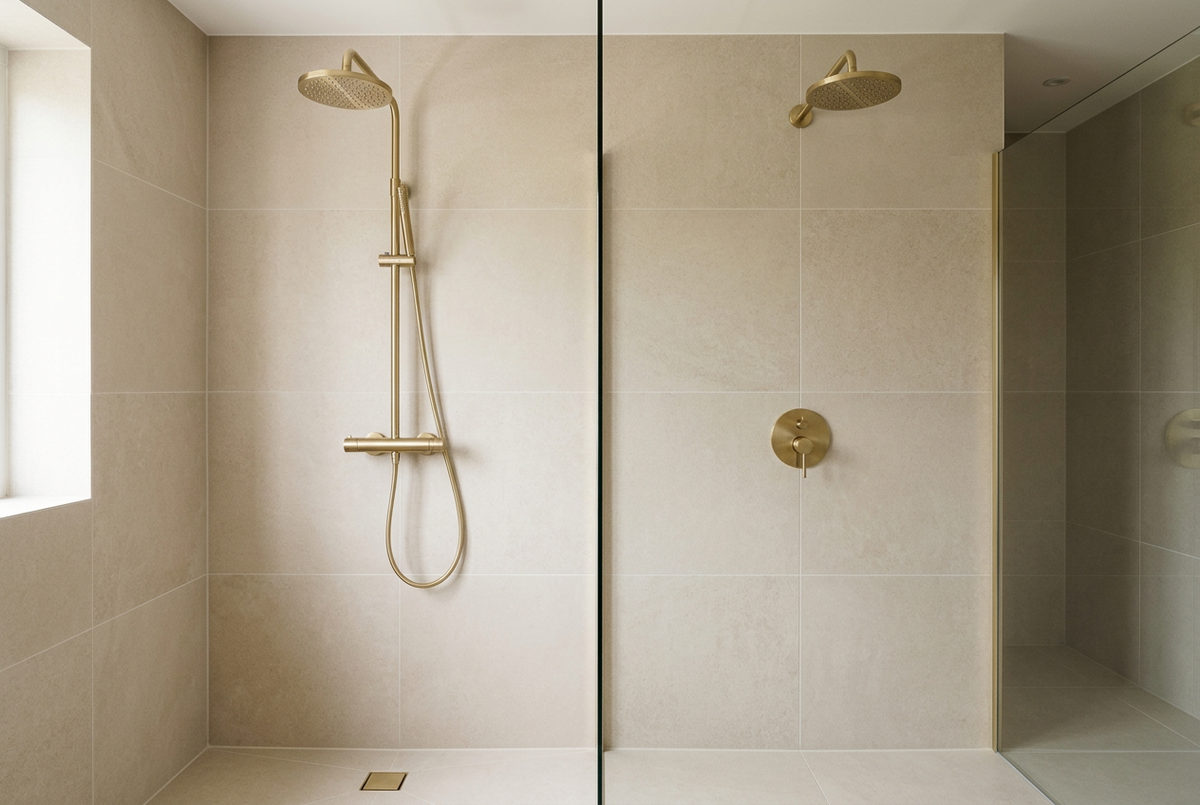
An exposed shower valve sits on the surface of the wall, with the controls, pipework and often a rigid riser on show. A concealed shower valve is built into the wall, so all you see is a slim trim plate with the controls and the shower head. Choose exposed if you want a quicker, simpler fit, easy access for servicing, or you are not retiling the whole shower wall. Choose concealed if you are renovating the shower area anyway and want the cleanest, most built-in look. Both can be thermostatic, both come in matching metal finishes, and both work with most UK water systems when you choose the right valve for your pressure.
Key facts
- Exposed bar valves in the UK usually fit to hot and cold supplies at 150 mm centres, which matches the pipe positions of many existing showers.
- Concealed valves need enough depth in the wall to house the valve body, so they must be planned before the wall is boarded and tiled.
- A thermostatic valve holds the temperature steady when someone uses water elsewhere in the house, and limits the risk of scalding.
- The number of outlets decides what the valve controls: one for an overhead head or handset, two for both, three to add a bath filler or body jets.
- Every valve has a minimum working pressure. Check yours before you buy, especially on a gravity-fed system.
|
Your situation |
Our recommendation |
|---|---|
|
Replacing an old shower without retiling |
Exposed |
|
Full bathroom renovation, walls stripped back |
Concealed or exposed, your choice of look |
|
Bath with a shower above |
Exposed bar valve with a bath filler, or a concealed three-outlet valve |
|
Minimal, hotel-style walk-in shower |
Concealed |
|
Statement brushed brass or black fittings on show |
Exposed |
|
Rental property or holiday let |
Exposed, for quick servicing |
|
Stud wall too shallow for a valve body |
Exposed |
|
Simplest swap on existing pipework |
Exposed |
How each valve works
Exposed shower valves
The most common exposed valve in the UK is the bar valve: a horizontal metal bar fixed to the wall, with the temperature control on one end and the flow control or diverter on the other. Hot and cold water enter from behind through two inlets, usually at 150 mm centres, and leave from the top to a riser and overhead head, or from the bottom to a hose and handset. Some bar valves add a bath spout below, so one valve fills the bath and runs the shower.
A rigid riser kit combines the bar valve with a fixed pipe running up the wall to an overhead drench head, plus a handset on a slide rail. Everything arrives as one matched set, so the valve, riser, head and handset share the same finish and design.
Our Code Shower Riser and Bath Filler is an example. A single thermostatic bar valve runs a round overhead drench head, a handheld shower and an integrated bath filler, in black, brushed brass or bronze, from £299.
Concealed shower valves
A concealed valve has the same job, but the valve body sits inside the wall. Your plumber fixes it to the studs or chases it into masonry at first fix, connects the hot and cold supplies and the outlet pipes, then the wall is boarded and tiled around it. Once the tiles are on, a slim trim plate and the control handles fit over the front. The shower head arm, handset outlet and any bath spout connect to outlets that also come through the wall.
The result is a clean wall with only the controls and heads visible. Concealed valves often come as kits with a matching ceiling or wall-mounted head, a handset on a slide rail or a fixed wall outlet, and the trim in the same finish.
Thermostatic or manual
Both types come in thermostatic and manual versions. A manual valve mixes hot and cold to a set ratio, so if someone flushes a toilet or runs a tap, the temperature can swing. A thermostatic valve contains a cartridge that reacts to changes in supply and holds your chosen temperature steady, with a safety stop that limits how hot the water gets. For family bathrooms, homes with children or older people, and anywhere with a combi boiler, we recommend thermostatic.
Outlets and diverters
The number of outlets tells you how many things the valve can run, and the diverter lets you switch between them.
|
Outlets |
What it controls |
Typical use |
|---|---|---|
|
One |
A single head or a single handset |
A simple shower, or a separate fixed head |
|
Two |
Overhead head and handset, switched by a diverter |
Most walk-in showers and enclosures |
|
Three |
Overhead head, handset and bath filler or body jets |
A bath with a shower above, or a high-specification walk-in |
Concealed vs exposed: head to head
|
Factor |
Exposed valve |
Concealed valve |
|---|---|---|
|
Look |
Bold, the valve and riser become a feature |
Minimal, only the trim plate and heads show |
|
When to fit |
Any time, including onto a tiled wall |
At first fix, before boarding and tiling |
|
Fitting time |
Shorter |
Longer, with pipe runs and outlets inside the wall |
|
Wall depth needed |
Very little |
Enough to house the valve body |
|
Fitting onto existing pipework |
Often straightforward at 150 mm centres |
Usually means opening the wall |
|
Servicing |
Easy, the valve is on the surface |
Through the trim plate, with access to the cartridge from the front |
|
If a joint leaks |
Visible and easy to reach |
Hidden in the wall, so it must be pressure tested before tiling |
|
Cleaning |
More surfaces to wipe |
Fewer surfaces, a flat trim plate |
|
Cost |
Usually lower overall, including fitting |
Usually higher overall, including fitting |
|
Finish matching |
Riser, head and handset come as one matched kit |
Trim, head, arm and handset must all match |
Pros and cons
|
Valve type |
Pros |
Cons |
|---|---|---|
|
Exposed |
Quick to fit, often onto existing pipe positions. Easy to service and replace. Works on shallow stud walls. Matched rigid riser kits make finish matching simple. Makes a statement in brushed brass, black or bronze. |
More metal on show to clean. The bar and riser can feel bulkier in a small enclosure. Pipework needs to come through the wall at the right centres. |
|
Concealed |
Clean, built-in look. Fewer surfaces to wipe. Flexible layouts, with heads and handsets placed wherever suits you. Suits minimal walk-in showers. |
Must be planned before tiling. Needs wall depth. Higher fitting cost. A leak inside the wall is harder to spot, so pressure testing is essential. Major repairs can mean removing tiles. |
The technical details that matter in UK homes
Water pressure and your hot water system
A mixer shower, exposed or concealed, takes hot water from your boiler or cylinder and cold water from the mains or a tank. Its performance depends on that supply, so check your system before you choose.
|
Hot water system |
What to know |
What to choose |
|---|---|---|
|
Combi boiler |
Mains pressure on both sides, but hot water flow depends on the boiler's output |
A thermostatic valve rated for high pressure. Ask your plumber what flow rate the boiler can deliver |
|
Unvented cylinder |
Mains pressure, strong flow on both sides |
Almost any mixer valve, exposed or concealed |
|
Gravity-fed tank and cylinder |
Low pressure, often well under 0.5 bar unless the tank is high above the shower |
A valve rated for low pressure, or a shower pump. Check the valve's minimum working pressure |
Check the minimum working pressure on the valve's data sheet and compare it with your supply. Our Code riser works from 0.5 bar. If you are unsure of your pressure, your plumber can measure it in a few minutes.
Wall depth for concealed valves
A concealed valve body needs a cavity deep enough to sit in, with its front set at the right depth so the trim plate meets the finished tile surface. Each valve has a minimum and maximum build-in depth, measured from the finished wall face. On a stud wall, your plumber may fit a timber noggin or a mounting bracket to hold the valve at that depth. On a masonry wall, the valve is chased in. If the wall is too shallow, an exposed valve is the simpler choice, or you can build out a false wall to create depth.
Waterproofing around a concealed valve
A concealed valve breaks through your shower wall's waterproof layer, so the joint between valve and wall needs as much care as the corners of the shower. Most concealed valves include a sleeve or collar that sits through the tanking. Seal it into the tanking membrane before tiling, and leave a small gap between the tiles and the trim plate for a bead of silicone. Pressure test every joint before the wall is closed up.
Servicing and spare parts
Thermostatic cartridges and diverters wear over time, particularly in hard water areas. On an exposed valve, you can usually remove the handle and reach the cartridge directly. On a concealed valve, you reach the cartridge through the front once the handle and trim are off. Either way, fit isolation valves on the hot and cold supplies so the shower can be serviced without turning off the water to the whole house. Most of South Wales has soft water, which slows limescale build-up and helps cartridges last longer.
Approvals and safety
Look for a valve with WRAS approval, which shows it meets the Water Supply (Water Fittings) Regulations. In new homes, the Building Regulations also require the hot water supplied to a bath to be limited to 48°C, so a thermostatic bar valve with a bath filler is a practical choice for new builds as well as renovations.
Electric showers
An electric shower is a third option, heating cold mains water inside the unit. It suits homes with low hot water pressure or a small hot water supply, and it needs a dedicated electrical circuit fitted by a registered electrician. See our electric showers if a mixer shower does not suit your system.
Which valve suits your bathroom
Bath with a shower above
An exposed bar valve with an integrated bath filler gives you one set of controls for the bath and shower, with no separate bath taps to fit. The Code Shower Riser and Bath Filler runs an overhead drench head, a handset and the bath spout from one thermostatic valve. Pair it with a fixed bath screen for a neat finish. A concealed three-outlet valve does the same job with a cleaner wall, if you are retiling anyway.
Walk-in shower
A concealed valve suits a minimal walk-in shower, where an uninterrupted wall of large-format porcelain or a single shower panel is part of the look. An exposed rigid riser also works well, especially in brushed brass or black against pale tiles, where the riser becomes a feature. Add a recessed niche in the same finish to keep bottles off the floor.
Small en suite or shower enclosure
In a narrow enclosure, a concealed valve frees elbow room because nothing projects from the wall. If you are keeping the existing tiles, an exposed valve fitted to the current pipe positions is the quickest upgrade.
Rental properties and holiday lets
Exposed valves are easier and quicker to service between tenancies. A thermostatic exposed valve with a handset also suits a wide range of guests and is simple to use.
Period homes
Traditional exposed valves with crosshead or lever handles suit Victorian and Edwardian homes, especially with a roll-top bath. In a modern renovation of an older property, a concealed valve gives a clean contemporary contrast.
Matching your finish
Whichever valve you choose, the shower is often the largest piece of metal in the bathroom, so it sets the finish for everything else. Choose taps, a towel rail, a niche and accessories in the same finish for a coordinated look. The Code riser comes in black, brushed brass and bronze, which match our Flow, Manhattan and bela basin taps and our metal niches. Our guide to bathroom tap finishes explains how each finish works with your tiles, and why it pays to compare finishes side by side before you buy.
Common mistakes to avoid
- Choosing a concealed valve after the wall is tiled. It must go in at first fix.
- Ignoring the minimum working pressure. A valve built for mains pressure can disappoint on a gravity system.
- Setting a concealed valve at the wrong depth. The trim plate will not sit flush with the tiles.
- Tiling over a concealed valve without a pressure test. Test every joint first.
- Leaving out isolation valves. Servicing then means shutting off the whole house.
- Buying a valve with too few outlets. Count everything it must run, including a bath filler.
- Mixing finishes from different ranges. The riser, head and handset should match.
For the trade
Agree the valve type, outlet count and finish with the client before first fix, and confirm the build-in depth for concealed valves against the wall construction. For quick refits and bath-shower combinations, an exposed thermostatic bar valve on existing 150 mm centres keeps the job short. A trade account gives you trade pricing on showers, taps and tiling essentials, with local collection from Brackla.
Frequently asked questions
What is the difference between a concealed and an exposed shower valve?
An exposed shower valve is mounted on the surface of the wall, with the valve and usually a riser pipe on show. A concealed shower valve is built into the wall, so only a trim plate, the controls and the shower heads are visible. Both can be thermostatic and run one, two or three outlets.
Is a concealed shower better than an exposed shower?
Neither is better in every case. A concealed shower gives a cleaner, more minimal look and suits full renovations where the wall is being retiled. An exposed shower is quicker to fit, easier to service, works on shallow walls and often fits existing pipework, which makes it ideal for refits and bath-shower combinations.
Can I fit a concealed shower without retiling?
Usually not. A concealed valve sits inside the wall, so fitting one means opening the wall, running pipework and outlets, then waterproofing and retiling around the valve. If you want to keep your existing tiles, an exposed valve fitted to the current pipe positions is the simpler choice.
Do thermostatic showers work with combi boilers?
Yes. A thermostatic shower valve suits a combi boiler well, because it holds the temperature steady when water is used elsewhere in the house. Check that the valve is rated for mains pressure, and ask your plumber what hot water flow rate your boiler can deliver.
What does 150 mm centres mean on a shower valve?
It is the distance between the hot and cold inlets on the back of an exposed bar valve, measured from the centre of one to the centre of the other. Most UK bar valves use 150 mm centres, so a new valve often fits the existing pipe positions when you replace an old one.
See our showers in Bridgend
The best way to choose between a concealed and an exposed valve is to see both in person and talk through your water system and wall construction. Bring a photo of your current shower, your boiler type and your room measurements, and our team will help you choose the right valve, finish and accessories.
Visit us at Unit 1, Main Avenue, Brackla Industrial Estate, Bridgend, CF31 2BB. We are open Monday to Friday from 8am to 5pm and Saturday from 10am to 2pm. Call 01656 767740, browse our showers online, or plan your visit.
